Showing posts with label DOJ. Show all posts

Sunday, August 9, 2015

Softball Texas Interview Genuflects to TOYOTA's Headquarters


Easygoing CEO is firmly in control of Toyota North America


 1/6 
Smiley N. Pool/Staff Photographer
Jim Lentz has quietly become the most powerful North America CEO in Toyota’s 58-year history in the U.S., with responsibility for sales, marketing, engineering, manufacturing and corporate. Now, the headquarters move to Plano is enabling him to alter the company’s culture.


Tuesday, March 3, 2015

Car dealer settles Lexus [Saylor Family] deaths lawsuit


...that this is costing me $$$$! It's still cheaper than fixing TOYOTAS!
Think of all the money we've saved!


Car dealer settles Lexus deaths lawsuit

Trial was set to begin this week in deaths of CHP Officer Mark Saylor and family

— A wrongful-death lawsuit against a former El Cajon Lexus dealer accused of contributing to the fiery deaths of a California Highway Patrol officer and his family settled days before trial was set to begin in Los Angeles.


photo
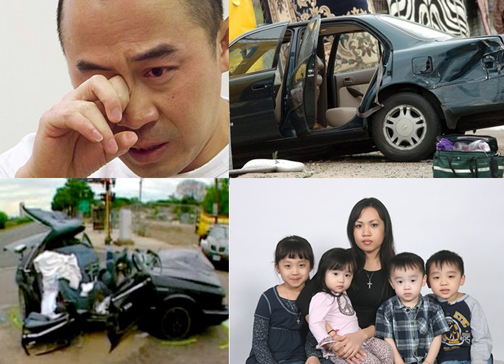
Chris Lastrella, 38, who died in a bizarre high-speed car crash in Santee. He was killed alongside his sister, Cleofe Saylor, her husband, CHP Officer Mark Saylor, and the couple's 13-year-old daughter, Mahala.
The settlement between the parents of the victims and car dealer Bob Baker is the latest in a case that has received worldwide attention over unintended acceleration problems in Toyota and Lexus vehicles.

The terms of the settlement, including the amount, are confidential, and none of the parties involved would discuss the agreement.

A spokeswoman with the Los Angeles County Superior Court confirmed that the parties called the court Thursday to say that they had settled the case. Trial had been set to begin Monday.

It is the second settlement that the parents of both the officer and his wife have received in the lawsuit. In 2010 they accepted a $10 million payout from Toyota.

The Aug. 28, 2009, crash in Santee set off a ripple effect that has cost Toyota billions of dollars in settlement payouts and led to massive recalls.

The crash occurred as California Highway Patrol Officer Mark Saylor was driving the loaner Lexus ES350 from Bob Baker Lexus El Cajon with his wife, Cleofe, their daughter, 13-year-old Mahala, and his brother-in-law, Chris Lastrella.

In a 911 call as the car was barreling north on state Route 125, Lastrella reported the accelerator was stuck and brakes weren't working. The call cut off as the Lexus struck a Ford Explorer then launched into a ditch at Mission Gorge Road and erupted into flames.

An investigation pointed to a floor mat as a likely culprit. Since 2007, Toyota had known about the possibility that some floor mats, installed incorrectly, could make the accelerator stick, according to an investigation by the U.S. Justice Department. Lexus is a division of Toyota.

The lawsuit against Bob Baker Lexus alleged the dealership received warnings about such problems from Toyota but ignored them. Carpet mats that came with the Lexus ES350 were removed to keep them clean and replaced with oversized rubber mats that belong in an SUV, according to a trial brief filed by the plaintiffs.

Three days before the Saylor crash, a Bob Baker customer had returned his loaner with complaints that the floor mat had trapped the accelerator, but the dealership did nothing, the brief says.

Attorneys for Bob Baker Lexus argued that the car model was defective because it lacked clearance between the floor and pedal, lacked an override braking system and had confusing shifting and ignition button designs. Baker sold the El Cajon Lexus dealership a few years ago, telling U-T San Diego in an earlier interview that he was upset at Toyota's handling of the matter.

After the deaths, Toyota issued a flurry of recalls totaling 10 million Toyota and Lexus vehicles to fix problems with ill-fitting floor mats, sticky pedals and faulty brakes.

Toyota agreed to take a $1.1 billion charge against its earnings to cover settlements to owners who claimed to have suffered economic loss related to the recalls. The company also has settled about 200 wrongful-death and injury lawsuits.

But the Justice Department determined that wasn't enough. The government ordered the automaker last March to pay a record $1.2 billion for hiding knowledge that similar problems were present in other vehicle models, as well as failing to disclose to the National Highway Transportation Safety Administration that improperly manufactured pedals were also a major threat.

From 2010 to 2012, Toyota has also paid more than $66 million in fines for delays in reporting safety problems.

Previous: Scars from crash remain raw | Toyota admits hiding defects, fined $1.B

Staff writer Karen Kucher contributed to this report.


http://m.utsandiego.com/news/2015/mar/03/bob-baker-saylor-settle-crash-lawsuit/


JUST MY OPINION...AT THE MOMENT!


Friday, February 27, 2015

General Motors refuses to fix damage caused by defective part


Consumer Watchdog: General Motors refuses to fix damage caused by defective part

  February 27. 2015

Christine Young, Consumer Watchdog


Is it possible for a company to habitually manufacture and sell shoddy, dangerous products and treat its customers as if they're fools – and still remain in business?

Sure it is.

Take General Motors, which recalled a record-breaking 30.4 million vehicles in 2014, more than any other car company in the U.S. The recall number includes vehicles with a defective ignition switch that prompted a federal investigation and the establishment of a victims' compensation fund that has 4,345 claims currently under review, including 479 deaths and 292 serious injuries such as quadriplegia, paraplegia, double amputation, permanent brain damage and pervasive burns, allegedly received in accidents in 2.6 million GM vehicles with the faulty switch.

Unfortunately, the drivers and passengers in the other 28 million recalled GM vehicles don't have a victims' compensation fund, but not everyone who owns a recalled vehicle gets hurt or killed. Some just get the car fixed before anything goes wrong and that's the end of it. Those who aren't so lucky are left to their own devices to get a fair shake from GM.

Among those unlucky GM customers is schoolteacher Kevin Moran of Harveys Lake, who was driving his 2013 Chevy Spark on a bright and sunny Christmas Day in 2014 with his wife. The car was loaded with presents, and there was very little traffic on the Cross Valley Expressway. It seemed like perfect day to relax and celebrate with family – until they heard a horrendous, explosive noise and the blue sky disappeared.

The hood of the Spark had blown open and smashed the windshield, completely blocking their view and covering both Morans in shattered glass. Using the rear-view mirrors, Kevin maneuvered the vehicle to the side of the highway. Both he and his wife were shaken, but unhurt.

Realizing they were less than a mile from Bonner Chevrolet, Kevin tied the hood down, drove at a crawl to the dealer's lot, and called a relative to pick them up so they could enjoy what was left of Christmas Day. “Most of the day was spent retelling the story and hearing from everyone just how fortunate we were,” he said.

As it happened, GM had issued a recall for possible hood-latch failure in mid-November. The recall letter stated, “We will send you another notice to inform you when parts are available to repair your vehicle.”

By Christmas Day, however, no such letter had arrived, and Moran's car looked as though it had been in a crash – bent and broken hood and fenders, pulverized windshield, scratched-off paint, busted hinges.

The body shop at Bonner estimated the damage at $5,001.32. With the car's book value at about $9,500, it was worth the fix.

“The guys at Bonner were terrific,” says Moran. “They were confident that this was a simple recall issue and that GM would pick up the tab.”

The guys at Bonner were wrong.

Instead, GM instructed Bonner to jack up the estimate to a higher “warranty rate,” raising the repair cost to over $7,000 and enabling GM to declare the vehicle a total loss.

Instead of reimbursing Moran his vehicle's book value of $9,500, GM offered him $7,500 and a $2,000 “Owner Loyalty” coupon.

That's like $2,000 in Monopoly money – no good unless you're willing to play the game, which Moran was not.

With this offer, GM was forcing him to either buy a new Chevy or buy another make and lose $2,000 of what his car was worth — before the Chevy defect totaled it.

Moran refused the offer and spent several weeks trying to persuade GM “Customer Care” to fix the car at the rate Bonner had quoted, but “Customer Care” stopped responding to his emails.

“I ended up having my insurance repair the vehicle at Bonner for the initial estimate and paid a $250 deductible,” Moran told me.

I contacted GM Spokesman Alan Adler and asked if GM would reimburse Moran the $250 deductible he'd shelled out to repair the damage caused by Chevy's defective hood latch.

That afternoon Moran said he got a call from “Jennifer” at GM media relations.

“She seemed to think GM did everything correctly and that the offer they made originally would satisfy most of their customers.”

Really, Jennifer? Most GM customers would be satisfied with having their car destroyed by a GM manufacturing defect and then being arm-twisted into either buying another GM car or taking a $2,000 loss?

Maybe so, because in 2014, despite $4.1 billion in recall expenses, GM made a tidy operating profit of $6.5 million on worldwide sales of 9.9 million vehicles – a two percent jump over the company's record-setting 2013 sales.

I wrote another email to Adler, asking again if GM would reimburse Moran the $250. Seems like a simple case of right and wrong, I told him.

“Mr. Moran's case is with GM customer assistance and I hope it can be resolved to his satisfaction,” Adler replied.

There you have it, folks — GM “Customer Care” at its best.
Christine Young is the Times Leader's Consumer Watchdog. She can be reached at nepaconsumerwatchdog@gmail.com. Her column appears weekly.


http://www.timesleader.com/news/local-news/152094269/


Parris Boyd
I've also (see previous comment) been blogging about the "total loss" racket, having experienced a situation similar to Mr. Moran's, whereby directives were issued to a body shop to pad repair costs in order to meet state requirements for "totaling" my vehicle. Search "Like a good MUGGER, State Farm is there..." and read my post "Why is State Farm 'totaling' my car?"


Parris Boyd
It should be obvious to all that we have a corporate-controlled government - Repukes n Demagogues alike - that allows crooked special interests to run roughshod over consumers amidst a never-ending parade of blood-spattered scandals. NHTSA is a lapdog for the auto industry and the "Just Us" Department stands guard to make sure none of the executives at Toyota, GM, Takata, etc. ad nauseum wind up in prison. I've been blogging about the sorry state of affairs - search "Beware of Toyota. Their next victim may be YOU..."


Friday, January 16, 2015

Defining an industry that eschews safety....


There's enough blame to go around....including NHTSA's revolving door....


...ignoring complaints.....


...DOJ's Get-Out-Of-Jail-Free $1.2 BILLION TOYOTA SETTLEMENT.....


...TOYOTA COMPLAINTS that were ignored....
...TOYOTA OIL SLUDGE COMPLAINTS that were ignored.....


....TOYOTA'S MELTING DASHBOARDS.....


+ 37,900 complaints ignored by Toyota


In each of the cases, the DEFECTS were KNOWN! 

To pretend correcting KNOWN DEFECTS will lead to higher prices .......


Car Costs to Rise as Deadly Flaws Lead to Stricter Safety


By Ma Jie and Masatsugu Horie

Jan 16, 2015


Auto-parts suppliers are feeling the pressure as car companies move to raise quality standards after a record year for U.S. vehicle recalls in 2014.
 
In Japan, parts makers that sell to automakers worldwide say they’re taking costly steps to meet higher international quality standards, introducing extra safety features in their component designs, and buying more sophisticated inspection equipment. In the wake of massive recalls for deadly flaws such as General Motors Co. (GM)’s defective ignition switches and Takata Corp. (7312) air bags that spewed metal shards at motorists, the suppliers say they have little choice in the matter.

“It’s expensive,” said Shigenobu Nagamori, the president of Nidec Corp. (6594), a Kyoto-based maker of small precision motors that’s seeking to expand its business with carmakers. “But otherwise, if we’re forced to compensate for losses later on, we’ll all be finished.”

Carmakers recalled more than 60 million vehicles in the U.S. last year, double the previous record set in 2004. As the National Highway Traffic Safety Administration pledges to step up scrutiny this year, the renewed focus on quality will add to manufacturing costs -- which in turn may lead to consumers paying more for cars.
Photographer: Tomohiro Ohsumi/Bloomberg
An employee inspects auto parts on the production line of Iwaki Diecast Co.'s plant in...Read More

“The risk of recalls will get even bigger in the future as cars use more and more electrical components and become more complicated,” saidSatoru Takada, an auto analyst at Toward the Infinite World Inc. “The costs auto-parts makers pay to ensure safety will probably continue to rise.”

Air-Bag Deaths

Honda, Japan’s third-largest automaker, has said it will scrutinize development and asked for support from suppliers after it recalled more than 13 million vehicles since 2008 due to Takata air bag flaws. Tokyo-based Takata and carmakers are investigating the root cause of the defects, which have been blamed for five deaths in the U.S. and Malaysia.
 
Takata expects a 25 billion yen ($212 million) loss this fiscal year after booking a 47.6 billion yen charge in the first half for product quality provisions. The company said in November it’s difficult to estimate the amount of damage claims it has received in the U.S.

Takata spokesman Hideyuki Matsumoto said the company regards safety and quality as its “No. 1 priority” and will continue to invest money to develop new technology and raise quality standards.

Honda Fines

Honda agreed this month to pay a record $70 million in civil fines for failing to tell the U.S. government about more than 1,700 deaths and injuries potentially linked to flaws in its vehicles. Also this month, Takanobu Ito, the company’s president, spoke about Honda’s quality issues in his address at an annual gathering in Tokyo that’s traditionally an awards gala to honor suppliers.
 
ZF Japan Co. President Richard Kracklauer, who attended, said it’s clear companies like his will need to work even harder to ensure high quality standards “if we are to continue business with Honda.”
 
Fumio Fujimori, president of Aisin Seiki Co., expects parts makers including his own company to spend more time and money pursuing higher product safety standards, which may in turn lead to higher product prices, he said in an interview this month. The company cut its profit forecast in October, citing mounting expenses for upgrading equipment to check quality.
 
Aisin Seiki, which is 35 percent owned by the Toyota group and makes parts ranging from transmissions to power door locks, will follow stricter designs required by an international standard known as ISO 26262, Fujimori said. It’s working to improve the traceability of products so that if a quality problem arises, the company can quickly analyze it and find the cause.

‘Mandatory’ Standards

Complying with ISO standards used to be a matter of “honor” for Japanese companies, said Fujimori, whose largest customer after Toyota Motor Corp. (7203) is Volkswagen AG. (VOW) Now, he said, it’s become “almost mandatory” for auto-parts makers as car manufacturers won’t buy from those that don’t.
 
Jtekt Corp. (6473), a maker of electric power-steering systems, will also implement the “fail-safe” systems required by ISO 26262 to ensure safety, even as such designs drive up costs, President Tetsuo Agata said in an interview in November. The Osaka-based company counts GM, Ford Motor Co. and Hyundai Motor Co. among its largest overseas customers.
 
“It’s about human life, so we really want to make sure to fully comply,” Agata said. “If we make mistakes in this area, it could easily cost us our position in the industry.”
 
Takata's shares dropped 3.5 percent, extending a five-day losing streak. Nidec’s shares fell 1.6 percent and Jtekt declined 2.3 percent in Tokyo trading on Friday. The benchmark Topix index slid 0.9 percent.


http://www.bloomberg.com/news/2015-01-16/car-costs-to-rise-as-deadly-flaws-lead-to-greater-safety-demands.html


Wednesday, November 5, 2014

TOYOTA SOFTWARE: ....reeking with problems....


Gastkommentar Jack Ganssle

Expensive Software


Der Autor: Jack Ganssle ist ein international anerkannter Spezialist für Embedded-Systeme sowie gefragter Autor und Referent. Auf dem ESE Kongress 2014 hält er die TecKeynote am 2. November.

Der Autor: Jack Ganssle ist ein international anerkannter Spezialist für Embedded-Systeme sowie gefragter Autor und Referent. Auf dem ESE Kongress 2014 hält er die TecKeynote am 2. November.(Foto: J. Ganssle)
 
One wonders why we as an industry continue to flail around with poor practices that are ultimately expensive and even deadly, when there is a body of knowledge that is provably effective.

As everyone knows by now, Toyota has agreed to a $1.2 billion fine [1] to settle a criminal case over unintended acceleration. A jury in Oklahoma found that, in one case at least, the culprit was the firmware. This payout is on top of another $1B settlement for the same problem [2].


Bottom line: poor firmware has cost the company staggering amounts of cash. Testimony shows [3] that the firmware wasn’t just suffering from a bug; instead it was reeking with problems. One has to wonder what the engineers were thinking.


Everyone in this industry faces twin pressures: fast and cheap. Deliver now. Cut engineering costs. I have no insight into how many person-hours went into the Toyota code, nor do I know their delivery schedule. But let’s look at that most recent $1.2B payout. How does that compare to the engineering effort?


The NASA report [4] talks about a code base of “more than 280,000 lines” of code. Mike Barr tells me there were “over a million lines of C source code”. For argument’s sake, let’s figure on a million.

The most expensive code ever written is that of the Space Shuttle, which ran about $1000/LOC (201 Principles of Software Development, Alan M. Davis, 1995). With just the most recent settlement, Toyota’s code cost them over $1200 per line – without accounting for any engineering effort. The difference is that the Shuttle’s code is the best ever written, averaging about one bug per 400KLOC, and Toyota’s has been intensely litigated.


I am not suggesting that Shuttle development practices should be anyone’s goal. Perhaps a better benchmark is avionics. It’s largely believed that no one has been killed by defective firmware in commercial aircraft, yet that code controls pretty much everything. Sure, the pilots can take over, but modern planes are fly-by-wire. The pilot flies a computer. What does it cost to develop the fabulous software that mediates billions of passenger-miles per day in the air?

Commercial avionics is done to a standard called DO-178B (supplanted recently by DO-178C). Level E applies to software that won’t impact operations in any significant way. Level A is for code that can lead to the loss of the aircraft. How much does it cost to write code to level A?

Who knows? Data is sparse and proprietary. However, most pundits figure it’s about twice the cost of typical commercial firmware. Others (“DO-178B Costs Versus Benefits” by Vance Hilderman), in this case based on data from some 150 avionics programs, claim code written to level A is 65% more expensive than that to level E. That figure includes both the engineering effort and the certification process.

Note that level C is roughly equivalent to Capability Maturity Model level 3, which is generally considered the entry point to disciplined software engineering. Level A (in the B version of the standard) has 66 objectives that must be met, while there are none at E.

If one skips the certification effort – which is huge - and just writes level A code, some studies (e.g., “Safety Critical Software and Development Productivity” by O. Benediktsson – though this paper looks at IEC 61508 rather than DO-178B) show that with the use of highly-disciplined processes there is no extra cost to producing the best possible software. Use an ad hoc approach and there’s a 70% hit.

Let’s be pessimistic and assume the very best avionics costs twice that of typical commercial firmware. My data pegs the latter at $20 to $40 per line of code, from initial specification to shipping.

Doubling the high end puts the cost at $80/LOC, or 15 times cheaper than Toyota’s most recent payout. Add in their other settlements, legal costs, lost sales, bad PR, and, oh, yeah, the actual firmware engineering, and that difference grows dramatically.

Take your pick: $1200+++/LOC for crappy code, or $80-- for world-class.

One wonders why we as an industry continue to flail around with poor practices that are ultimately expensive and even deadly, when there is a body of knowledge that is provably effective.

Literature

[1] http://www.nytimes.com/2014/03/20/business/toyota-reaches-1-2-billion-settlement-in-criminal-inquiry.html

[2] http://www.huffingtonpost.com/2012/12/26/toyota-settlement_n_2366720.html

[3] http://www.edn.com/design/automotive/4423428/Toyota-s-killer-firmware--Bad-design-and-its-consequences

[4] http://www.nhtsa.gov/staticfiles/nvs/pdf/NASA-UA_report.pdf


http://www.elektronikpraxis.vogel.de/themen/embeddedsoftwareengineering/management/articles/465678/
 

Friday, September 26, 2014

RSN: Jim Hood: An Attorney General Who Would Jail the Bankers


Oh? Maybe a different Attorney General would have insisted that TOYOTA correct their vehicles that are on our roads jeopardizing the safety of us all. Maybe TOYOTA'S LIES and CONCEALMENT woud have landed them in jail....whadyathink?


Send this phony baloney to prison after all the lives lost, families destroyed, people injured....


It's Live on the HomePage Now:
Reader Supported News


*AN URGENT DRIVE TO FINISH SEPTEMBER: We are pushing very hard to finish the September funding drive. This money allows RSN to continue keeping you up to date on information the mainstream media glosses over. Without adequate funding RSN cannot continue to have that impact it now has, and that you rely on. Make your contribution today. / Marc Ash - Founder, Reader Supported News*


FOCUS: Carl Gibson | Jim Hood: An Attorney General Who Would Jail the Bankers
Mississippi attorney general Jim Hood. (photo: Rogelia V. Solis/AP)
Carl Gibson, Reader Supported News
Gibson writes: "What kind of message does it send to the biggest banks that the top attorney for one of the world's largest economies is too afraid to take them to court after those banks swindled that country out of trillions of dollars?"
READ MORE


Friday, August 8, 2014

TOYOTA'S CORPORATE PLAYBOOK....Just continue the LIES!


So....you get caught.....


....the wise person changes their behavior.....


....not so TOYODA.....


...BETSY said it best!


O spotted leopard


Betsy Benjaminson exposed TOYOTA'S LIES!


PLEASE make a contribution in whatever amount you can afford to support the TRUTH BEING HEARD:


Can we allow TOYOTA to SILENCE THE TRUTH and jeopardize lives?

Friday, August 1, 2014

TRUTH swatted away by NHTSA!


Ya thought you were protected by NHTSA?

Think again!


Charlene Blake (@charleneblake)
Whistleblower on Toyota ELECTRONIC sudden unintended acceleration treated like a gnat and swatted away by NHTSA! #SUA betsybenjaminson.blogspot.com/2014/07/nhtsa-…


x


Is this what we want for CONSUMER PROTECTION?


These members of Mark Saylor's family were killed when an OUT-OF-CONTROL LEXUS crashed and burst into flames. TOYOTA settle for $10 MILLION with a CONFIDENTIALITY AGREMENT the dealership overturned. TOYOTA DOESN'T WANT YOU TO KNOW!


A few others TOYOTA doesn't want you to know.....


FROM: TOYOTA protecting its SECRETS!

The article below is a MUST READ! :

Barr and the DOJ- what we know and what we know that we don't know


PLEASE make a contribution in whatever amount you can afford to support the TRUTH BEING HEARD:


Can we allow TOYOTA to SILENCE THE TRUTH and jeopardize lives?


Can you kick in a few bucks to protect your family? Make sure the TRUTH is told?

TOYOTA counts on your ignorance!