Takata seeks to suspend airbag victims' lawsuits against carmakers
August 9, 2017 @ 6:35 am
Tom Hals and David Shepardson
Reuters
WILMINGTON, Del./WASHINGTON -- Takata Corp.'s bankrupt U.S. business will ask a federal judge on Wednesday to suspend lawsuits against automakers that have been brought by people injured by its faulty air bag inflators, something that opponents say is an abuse of the law.
Takata and TK Holdings Inc., the company's U.S. unit, filed for bankruptcy in June and said they faced tens of billions of dollars in liabilities from its inflators, which are subject to the biggest recall in automotive history.
Bankruptcy automatically stayed hundreds of lawsuits against TK Holdings for wrongful death, injuries, economic loss and breach of consumer protection laws. But in July the company sought a preliminary injunction to suspend lawsuits against automakers that use its inflators.
Without the injunction, Takata said the litigation would distract management from completing the sale of the company's viable operations to Key Safety Systems for $1.6 billion and could threaten the supply of airbag inflators to replace recalled ones.
Plaintiffs' lawyers called the requested injunction "an abuse of the bankruptcy laws for the benefit of all of the world's largest automobile manufacturers." They said Takata's request would delay consideration of plaintiff's lawsuits for six months or more, which would be a very long time for the plaintiffs.
The official bankruptcy committee that represents injured drivers said in court papers the injunction would have "human consequences" and prevent people from pursuing compensation.
The committee cited the example of a 23-year-old New Jersey woman whose quadriplegia resulted from brain injuries that a government investigator said were caused by a faulty Takata airbag.
The woman's lawyers estimated her economic loss would be $18 million, which does not include potential damages for pain and suffering.
At least 18 deaths and 180 injuries worldwide have been linked to Takata airbags. Takata has said it expected 125 million vehicles worldwide to be recalled by 2019.
Takata set aside $125 million to compensate those injured by its air bags as part of a guilty plea, but plaintiffs' lawyers argue it will not be enough.
Major automakers including BMW AG, Ford Motor Co., Honda Motor Co. and Toyota Motor Corp. sided with Takata in backing a six-month delay in lawsuits, arguing in a court filing that doing so would "advance the interests of their customers and the safety of the motoring public by increasing the likelihood" the Takata restructuring will succeed and "protect the supply of replacement inflators and diminish the risk of future deaths and injuries."
Takata seeks US bankruptcy protection after air-bag recalls
Monday, June 26, 2017
Takata Corp filed for bankruptcy in the US, more than eight years after initial recalls involving its defective air bags spiralled int
o the biggest safety crisis in automotive history.
PHOTO: REUTERS
[TOKYO] Takata Corp filed for bankruptcy in the US, more than eight years after initial recalls involving its defective air bags spiralled into the biggest safety crisis in automotive history.
The Tokyo-based supplier filed for Chapter 11 bankruptcy in Delaware, listing more than US$10 billion in liabilities, according to court filings. Takata entered the bankruptcy filing with a plan to sell the company.
Key Safety Systems Inc, a US air-bag maker, is set to take over Takata for about 180 billion yen (S$2.22 billion), people familiar with the matter have said.
Shares and bonds of Takata - whose products are used by carmakers including Honda Motor Co and Ford Motor Co - have slumped as investors anticipated an imminent bankruptcy filing by the manufacturer of faulty air-bag inflators linked to at least 17 deaths worldwide.
In the US alone, about 43 million air bags inflators are currently subject to recall, and only about 38 per cent have been repaired as of May 26, according to data on the US Department of Transportation's National Highway Traffic Safety Administration's website.
In Japan, the recall affects close to 19 million vehicles and is 73 per cent complete, a spokesman at the country's transport ministry said this month.
The challenges for Takata's acquirer will be manifold. The Japanese parts maker posted its third-straight annual loss even without including the full costs of repairing millions of air bags, which automakers are now paying for. It will have to stem an exodus of talent at Takata, even as it works to regain trust and demonstrate to automakers the process won't result in disruption of supplies.
Japan Credit Rating Agency on June 20 cut Takata's credit rating to the lowest level before default citing the increasing likelihood that the component maker will file for bankruptcy protection.
Even so, Key Safety, the world's fourth-largest air-bag maker bought by Ningbo Joyson last year, would gain greater access to Japanese automakers and the combined entity would pull closer in market share to leader Autoliv Inc.
Takata's biggest customer Honda first started recalling Accord and Civic models in 2008 to replace the supplier's air bags. The company's air-bag inflators used ammonium nitrate as a propellant that can be rendered unstable after long-term exposure to heat and humidity, leading them to rupture and spray metal shards at vehicle occupants. More than a dozen other automakers including Volkswagen AG, Toyota Motor Corp and General Motors Co have also recalled vehicles fitted with the Japanese company's devices.
In January, Takata admitted to hiding the deadly risks of its exploding air bags for about 15 years in an agreement to pay US$1 billion to US regulators, consumers and carmakers. Auto manufacturers including Toyota, Subaru Corp, Mazda Motor Corp and BMW AG reached settlements worth US$553 million to resolve economic-loss claims tied to the air-bag recalls.
Takata, founded by the Takada family in the 1930s as a textile maker, produced parachutes for the Imperial Japanese Army during World War II. In 1960, it started manufacturing seat belts for local automakers, which were leading the country's industrial expansion.A few years later, Honda asked Takata to look into manufacturing air bags.
Juichiro Takada, who had taken over from his father and company founder Takezo Takada in 1974, initially hesitated. Air bags deploy in controlled explosions, and he judged the risks of making them to be too great.
Eventually though, Takada relented. By 1989, air bags had become standard in all US cars. And in 1990, Takata produced its first air bag. In the early 2000s, Takata started using ammonium nitrate as propellant.
The parts maker went public in 2006, with the Takada family and trust retaining a majority stake. Shigehisa Takada, 51, took over the reins of the company when his father died in 2011. As recall followed recall, he apologised in written statements and newspaper ads, but he didn't make a public apology until June 2015, after the annual shareholder meeting.
F.B.I. Arrests Volkswagen Executive on Conspiracy Charges in Emissions Scandal
ADAM GOLDMAN and HIROKO TABUCHI
JAN. 9, 2017
The executive, Oliver Schmidt, led the automaker’s regulatory compliance office in the United States from 2014 to March 2015.
The Federal Bureau of Investigation has arrested a Volkswagen executive who faces charges of conspiracy to defraud the United States, two people with knowledge of the arrest said on Sunday, marking an escalation of the criminal investigation into the automaker’s diesel emissions cheating scandal.
Oliver Schmidt, who led Volkswagen’s regulatory compliance office in the United States from 2014 to March 2015, was arrested on Saturday by investigators in Florida and is expected to be arraigned on Monday in Detroit, said the two people, a law enforcement official and someone familiar with the case.
After a study by West Virginia University first raised questions over Volkswagen’s diesel motors in early 2014, Mr. Schmidt played a central role in trying to convince regulators that excess emissions were caused by technical problems rather than by deliberate cheating. Much of the data presented to regulators was fabricated, officials of the California Air Resources Board have said.
Mr. Schmidt continued to represent Volkswagen after the company admitted in September that cars were programmed to dupe regulators. He appeared before a committee of the British Parliament in January, telling legislators that Volkswagen’s behavior was not illegal in Europe.
Lawyers representing Mr. Schmidt did not respond to requests for comment late Sunday. Officials at the Justice Department also declined to comment, as did an F.B.I. spokesman in Detroit.
In a statement, Jeannine Ginivan, a spokeswoman for Volkswagen, said that the automaker “continues to cooperate with the Department of Justice” but that “it would not be appropriate to comment on any ongoing investigations or to discuss personnel matters.”
Lawsuits filed against Volkswagen by the New York and Massachusetts state attorneys general accused Mr. Schmidt of playing an important role in the carmaker’s efforts to conceal its emissions cheating from United States regulators.
Starting in late 2014, Mr. Schmidt and other Volkswagen officials repeatedly cited false technical explanations for the high emissions levels, the state attorneys general said. In 2015, Mr. Schmidt acknowledged the existence of a so-called defeat device that allowed Volkswagen cars to cheat emissions tests.
Volkswagen eventually said that it had fitted 11 million diesel cars worldwide with illegal software that made the vehicles capable of defeating pollution tests.
The software enabled the cars to sense when they were being tested for emissions and turn on pollution-control systems to curb emissions at the cost of engine performance. But those controls were not fully deployed on the road, where cars spewed nitrogen oxide at up to 40 times the levels allowed under the Clean Air Act.
James Liang, a former Volkswagen engineer who worked for the company in California, pleaded guilty in September to charges that included conspiracy to defraud the federal government and violating the Clean Air Act. But Mr. Schmidt’s arrest brings the investigation into the executive ranks.
The arrest came as Volkswagen and the Justice Department neared a deal to pay more than $2 billion to resolve the criminal investigation into the emissions cheating. The company or one of its corporate entities is expected to plead guilty as part of the deal.
The settlement could come as early as next week, barring any last-minute hiccups, according to people with knowledge of the negotiations.
The German automaker has been eager to put the Justice Department investigation behind it before President-elect Donald J. Trump is sworn in on Jan. 20.
American prosecutors had traveled to Germany in recent months to interview Volkswagen executives, according to German prosecutors.
The criminal case against Volkswagen, and the potential guilty plea, set it apart from other recent auto industry investigations. In settlements with General Motors and Toyota over their handling of safety defects, for example, the companies agreed to pay large fines, but did not plead guilty.
Prosecutors are also mulling criminal charges against Takata, the Japanese manufacturer under criminal investigation for its defective airbags.
Volkswagen has already agreed to pay up to nearly $16 billion to resolve civil claims in what has become one of the largest consumer class-action settlements ever in the United States, involving half a million cars.
Under the settlement, most car owners have the option of either selling their vehicles back to Volkswagen, or getting them fixed, provided the automaker could propose a fix that satisfied regulators.
The scandal has affected many Volkswagen and Audi models, including the Audi A3 and Volkswagen Beetle, Golf, Jetta and Passat diesel cars.
Ben Protess and Jack Ewing contributed reporting.
A version of this article appears in print on January 9, 2017, on Page A13 of the New York edition with the headline: F.B.I. Arrests Volkswagen Executive on Conspiracy Charges in Emissions Cheating Scandal.
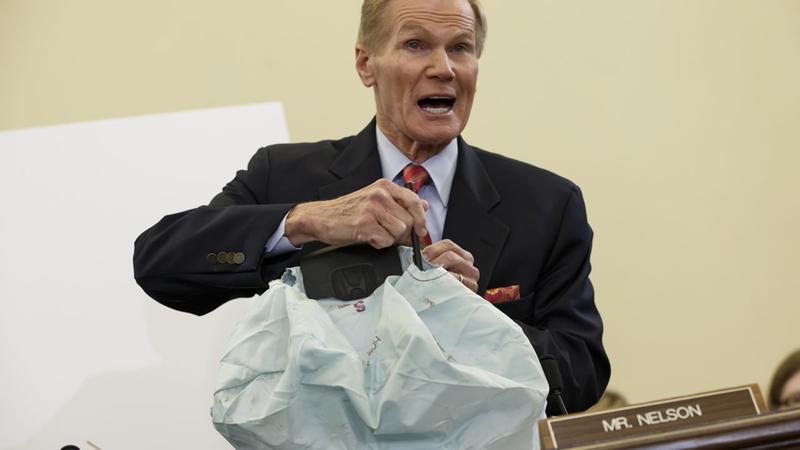
Senate Commerce Committee member Sen. Bill Nelson, D-Fla. displays the parts and function of a defective airbag made by Takata of Japan on Nov. 20, 2014. (AP Photo)
DETROIT --
Air bag maker Takata Corp. has agreed to declare 33.8 million of its inflator mechanisms defective, effectively doubling the number of cars and trucks that have been recalled in the U.S. so far.
The announcement was made Tuesday afternoon by the National Highway Traffic Safety Administration, which reached an agreement with Takata after sparring with the company for the past year over the size of the recalls and the cause of the problem with millions of air bags. It will be the largest recall in the agency's history.
Many of Takata's air bags can explode with too much force, blowing apart a metal canister and sending shrapnel into the passenger compartment. The air bags are responsible for six deaths worldwide and more than 100 injuries.
Ten automakers, including Honda Motor Co. and Toyota Motor Corp., have recalled 17 million vehicles in the U.S. and more than 36 million worldwide because of the problem. Those numbers will grow by millions because of the agreement, but it's unclear which manufacturers will be most affected by the expanded recalls.
Automakers must conduct recalls even if they are for defective parts.
The Takata recall dwarfs last year's highly publicized recall of 2.6 million General Motors small cars for defective ignition switches.
Rosekind also said motorists should continue driving their cars, but also look online to see if a car's VIN number falls under the recall list. If it does, an individual must immediately take their car to their original dealership to get a replacement airbag. They can check their car's VIN online at www.safercar.gov.
Inside a Takata showroom in Tokyo on Thursday.Credit Shizuo Kambayashi/Associated Press
Alarmed by a report a decade ago that one of its airbags had ruptured and spewed metal debris at a driver in Alabama, the Japanese manufacturer Takata secretly conducted tests on 50 airbags it retrieved from scrapyards, according to two former employees involved in the tests, one of whom was a senior member of its testing lab.
The steel inflaters in two of the airbags cracked during the tests, a condition that can lead to rupture, the former employees said. The result was so startling that engineers began designing possible fixes in preparation for a recall, the former employees said.
But instead of alerting federal safety regulators to the possible danger, Takata executives discounted the results and ordered the lab technicians to delete the testing data from their computers and dispose of the airbag inflaters in the trash, they said.
The secret tests, which have not been previously disclosed, were performed after normal work hours and on weekends and holidays during summer 2004 at Takata’s American headquarters in Auburn Hills, Mich., the former employees said.
That was four years before Takata, in regulatory filings, says that it first tested the problematic airbags. The results from the later tests led to the first recall over airbag rupture risks in November 2008.
Today, 11 automakers have recalled more than 14 million vehicles worldwide because of the rupture risks. Four deaths have been tied to the defect, which can cause the airbag’s steel canister to crack and explode into pieces when the device deploys in a crash. The airbags are inflated by means of a propellant, based on a common compound used in fertilizer, that is encased in the canister, which together are known as the inflater.
Complaints received by regulators about various automakers blame Takata airbags for at least 139 injuries, including 37 people who reported airbags that ruptured or spewed metal or chemicals.
Takata is one of the world’s largest suppliers of airbags, accounting for about one-fifth of the global market.
The former Takata employees, who between them had four decades of experience at the company, spoke on the condition of anonymity because of continuing ties to Takata. They said they were speaking up because of concerns that their former employer was not being forthright about the defective airbags.
“All the testing was hush-hush,” one former employee said. “Then one day, it was, ‘Pack it all up, shut the whole thing down.’ It was not standard procedure.”
A spokesman for Takata, Alby Berman, declined to comment on the disclosure of the testing.
OPEN Graphic
Graphic: Takata Airbag Recalls: Affected Vehicles
In the past, a spokesman for Honda said it was assured by Takata in 2004 that the episode in Alabama, which involved a 2002 Honda Accord, was an anomaly.
On Thursday, a Honda spokesman, Chris Martin, said in a statement, “This is a serious allegation about actions taken by Takata. It is our intention to determine whether anyone at Honda has any evidence that these claims are credible.”
Separately, materials reviewed by The New York Times cast doubt on Takata’s claims to federal regulators that it had resolved manufacturing and quality control problems with its airbag propellant in the early 2000s. Takata has said, in regulatory filings, that by November 2002, it had ensured that there was “proper handling” of the propellants at a factory in Moses Lake, Wash., where it had traced problems with the rupturing airbags.
But as recently as April 2009, Takata engineers scrambled to repair a flaw in a machine at another factory in Monclova, Mexico, that made the airbag propellant more volatile, according to materials from a company presentation given that year.
Two former quality-control managers at the company’s main distribution center in Texas, moreover, described in interviews a series of quality problems that arose as the company raced to meet a surge in demand for its airbags.
The Times reviewed internal Takata documents, emails, photos, videos and regulatory filings. Emails show workers raising concerns that airbag units were being delivered to automakers wet or damaged because of transportation mishaps. Closed-circuit television footage shows forklifts dropping stacks of the airbag units.
Danger in the Steering Wheel
Eleven carmakers, including Toyota, Honda, Nissan, Mazda, Ford, Chrysler and BMW, have recalled more than 14 million cars worldwide, including more than 11 million in the United States, to fix a defect in airbags made by the Takata Corporation. Some have ruptured, sending metal fragments into the car. At least four deaths and more than 30 injuries have been linked to the problem.
INFLATER/CANISTER
PROPELLANT
Cutaway view
INFLATER/CANISTER
STEERING WHEEL
AIRBAG
HOW IT WORKS:
Inside the canister, pellets of a propellant based on ammonia nitrate, a common compound used in fertilizer, are ignited and generate the nitrogen gas that inflates the airbag in a fraction of a second.
THE PROBLEM:
Takata has said manufacturing problems, together with exposure to moisture in cars in humid regions, can cause the propellant to degrade. This can make the propellant burn too strongly when the airbag is deployed, rupturing the inflater and sending metal fragments into the car’s interior and injuring the driver or passengers.
The dropped airbags were not always properly inspected for damage, especially in the early 2000s, according to the former quality-control managers who said they later pushed for stricter controls at the facility. The two spoke on the condition of anonymity because of fear of retribution.
Takata is facing renewed scrutiny for its handling of the defective airbags, which The Times reported in September had been the subject of a short-lived investigation by the National Highway Traffic Safety Administration that was closed in 2010 without any enforcement action. The federal agency has now reopened its investigation into Takata, a House committee has asked the Government Accountability Office to conduct its own investigation, and federal prosecutors in Manhattan have also taken an interest.
“Claims such as these have raised additional concerns about Takata’s handling of airbag issues and are one of the reasons we’re compelling them to produce documents and answer questions, under oath,” the highway safety agency said.
The Takata spokesman, Mr. Berman, said, "Takata will continue to fully cooperate with the government investigation as we also support the needs of our customers.”
In Tokyo on Thursday, the company’s chief financial officer apologized broadly for the problems caused by the defective airbags, while the company announced that legal uncertainty and rising recall costs would result in a larger-than-expected quarterly loss.
“We don’t know at this point how things will play out,” said Yoichiro Nomura, the chief financial officer.
Photo
A Takata distribution center in Texas. Former employees say quality problems arose as the company tried to fill demand for airbags.
The most recent death linked to the airbags involved an accident in a suburban Los Angeles parking lot last year. Hai Ming Xu, 47, was killed by an airbag that deployed explosively in his 2002 Acura TL.
The police in Alhambra, Calif., initially treated the case as a homicide because of the nature of his injuries, before an autopsy suggested the wounds were caused by the airbag, according to a Los Angeles County Coroner’s report. The report concluded that extensive lacerations on Mr. Xu’s face came from “a metallic portion” of the airbag inflater that “hit the deceased on the face as it deployed.” The report also said tears had been discovered in the airbag.
The first known rupture of a Takata airbag occurred in Alabama in 2004, according to Honda. The inflater that ruptured in the Accord and injured the car’s driver that year “looked like it had exploded, and had a hole punched out of the side of the canister,” said one of the former Takata lab employees who examined the airbag.
Takata and Honda have declined to disclose further details of that accident, which ended in a settlement between the automaker and the driver, according to Honda.
Behind the scenes, however, the former Takata lab employees said, the manufacturer wanted to know more. The tests on the 50 airbags were supervised by Al Bernat, then Takata’s vice president for engineering, they said, and were unknown to all but a small group of people, that included lab technicians, fabricators and engineers. The employees said that they did not know under whose authority Mr. Bernat was operating.
The tests’ results worried the technicians: Two of the airbag inflaters Takata had retrieved from the junkyards showed cracks and the start of “rapid disassembly” during the tests, Takata’s preferred term for explosion, according to the two people. They said Takata engineers at the time theorized that a problem with the welding of the inflater’s canister, intended to hold the airbag’s explosives, made its structure vulnerable to splitting and rupturing. The two people said engineers designed prototypes for possible fixes, including a second canister to strengthen the unit.
But after three months, they said, the testing was ordered halted. The lab employees were also instructed that all data, including video and computer backups, be destroyed. Inflaters and prototypes of fixes were also to be disassembled and disposed of in a scrap-metal Dumpster, the senior lab employee said. No explanation was offered, the employee said, though the order was not considered surprising given the secret nature of the testing.
As for the two problematic airbag inflaters, Mr. Bernat, the supervisor, told people at the time that they were not significant because they had been retrieved from cars with cracked windshields and were likely “corrupted by weather,” according to the two former employees.
Reached at his home in Rochester Hills, Mich., Mr. Bernat declined to comment and referred questions to his former employer. Takata also declined to comment.
As automakers have recalled the airbags in recent years, Takata has suggested that weather plays a significant role in making its airbags prone to rupture. Takata said humidity could hurt the stability of the airbag’s explosives.
In explaining the defect, the company has also pointed to manufacturing flaws involving the airbags’ explosive, or propellant, including improper exposure to moisture, and problems with a machine that presses propellant powder into tablets. Takata has said both troubles were corrected in the early 2000s.
But the internal documents suggest Takata engineers scrambled as late as 2009 to repair a machine at its Monclova plant that pressed explosive propellant powder into pellets after “inflaters tested from multiple propellant lots showed aggressive ballistics,” according to the internal presentation in June 2009.
Two former quality-control managers at the company’s main distribution center in Texas, moreover, described in interviews a series of quality problems that arose as the company raced to meet a surge in demand for its airbags.
The Times reviewed internal Takata documents, emails, photos, videos and regulatory filings. Emails show workers raising concerns that airbag units were being delivered to automakers wet or damaged because of transportation mishaps. Closed-circuit television footage shows forklifts dropping stacks of the airbag units.
Eleven carmakers, including Toyota, Honda, Nissan, Mazda, Ford, Chrysler and BMW, have recalled more than 14 million cars worldwide, including more than 11 million in the United States, to fix a defect in airbags made by the Takata Corporation. Some have ruptured, sending metal fragments into the car. At least four deaths and more than 30 injuries have been linked to the problem.
INFLATER/CANISTER
PROPELLANT
Cutaway view
INFLATER/CANISTER
STEERING WHEEL
AIRBAG
HOW IT WORKS:
Inside the canister, pellets of a propellant based on ammonia nitrate, a common compound used in fertilizer, are ignited and generate the nitrogen gas that inflates the airbag in a fraction of a second.
THE PROBLEM:
Takata has said manufacturing problems, together with exposure to moisture in cars in humid regions, can cause the propellant to degrade. This can make the propellant burn too strongly when the airbag is deployed, rupturing the inflater and sending metal fragments into the car’s interior and injuring the driver or passengers.
The dropped airbags were not always properly inspected for damage, especially in the early 2000s, according to the former quality-control managers who said they later pushed for stricter controls at the facility. The two spoke on the condition of anonymity because of fear of retribution.
Takata is facing renewed scrutiny for its handling of the defective airbags, which The Times reported in September had been the subject of a short-lived investigation by the National Highway Traffic Safety Administration that was closed in 2010 without any enforcement action. The federal agency has now reopened its investigation into Takata, a House committee has asked the Government Accountability Office to conduct its own investigation, and federal prosecutors in Manhattan have also taken an interest.
“Claims such as these have raised additional concerns about Takata’s handling of airbag issues and are one of the reasons we’re compelling them to produce documents and answer questions, under oath,” the highway safety agency said.
The Takata spokesman, Mr. Berman, said, "Takata will continue to fully cooperate with the government investigation as we also support the needs of our customers.”
In Tokyo on Thursday, the company’s chief financial officer apologized broadly for the problems caused by the defective airbags, while the company announced that legal uncertainty and rising recall costs would result in a larger-than-expected quarterly loss.
“We don’t know at this point how things will play out,” said Yoichiro Nomura, the chief financial officer.
Photo
A Takata distribution center in Texas. Former employees say quality problems arose as the company tried to fill demand for airbags.
The most recent death linked to the airbags involved an accident in a suburban Los Angeles parking lot last year. Hai Ming Xu, 47, was killed by an airbag that deployed explosively in his 2002 Acura TL.
The police in Alhambra, Calif., initially treated the case as a homicide because of the nature of his injuries, before an autopsy suggested the wounds were caused by the airbag, according to a Los Angeles County Coroner’s report. The report concluded that extensive lacerations on Mr. Xu’s face came from “a metallic portion” of the airbag inflater that “hit the deceased on the face as it deployed.” The report also said tears had been discovered in the airbag.
The first known rupture of a Takata airbag occurred in Alabama in 2004, according to Honda. The inflater that ruptured in the Accord and injured the car’s driver that year “looked like it had exploded, and had a hole punched out of the side of the canister,” said one of the former Takata lab employees who examined the airbag.
Takata and Honda have declined to disclose further details of that accident, which ended in a settlement between the automaker and the driver, according to Honda.
Behind the scenes, however, the former Takata lab employees said, the manufacturer wanted to know more. The tests on the 50 airbags were supervised by Al Bernat, then Takata’s vice president for engineering, they said, and were unknown to all but a small group of people, that included lab technicians, fabricators and engineers. The employees said that they did not know under whose authority Mr. Bernat was operating.
The tests’ results worried the technicians: Two of the airbag inflaters Takata had retrieved from the junkyards showed cracks and the start of “rapid disassembly” during the tests, Takata’s preferred term for explosion, according to the two people. They said Takata engineers at the time theorized that a problem with the welding of the inflater’s canister, intended to hold the airbag’s explosives, made its structure vulnerable to splitting and rupturing. The two people said engineers designed prototypes for possible fixes, including a second canister to strengthen the unit.
But after three months, they said, the testing was ordered halted. The lab employees were also instructed that all data, including video and computer backups, be destroyed. Inflaters and prototypes of fixes were also to be disassembled and disposed of in a scrap-metal Dumpster, the senior lab employee said. No explanation was offered, the employee said, though the order was not considered surprising given the secret nature of the testing.
As for the two problematic airbag inflaters, Mr. Bernat, the supervisor, told people at the time that they were not significant because they had been retrieved from cars with cracked windshields and were likely “corrupted by weather,” according to the two former employees.
Reached at his home in Rochester Hills, Mich., Mr. Bernat declined to comment and referred questions to his former employer. Takata also declined to comment.
As automakers have recalled the airbags in recent years, Takata has suggested that weather plays a significant role in making its airbags prone to rupture. Takata said humidity could hurt the stability of the airbag’s explosives.
In explaining the defect, the company has also pointed to manufacturing flaws involving the airbags’ explosive, or propellant, including improper exposure to moisture, and problems with a machine that presses propellant powder into tablets. Takata has said both troubles were corrected in the early 2000s.
But the internal documents suggest Takata engineers scrambled as late as 2009 to repair a machine at its Monclova plant that pressed explosive propellant powder into pellets after “inflaters tested from multiple propellant lots showed aggressive ballistics,” according to the internal presentation in June 2009.
Photo
Yoichiro Nomura, Takata’s chief financial officer, apologized on Thursday for the problems caused by the defective airbags.Credit Thomas Peter/Reuters
The internal materials and interviews with the former quality-control managers also suggest that quality control problems at......
PLEASE READ THE REST OF THE ARTICLE AND VIEW THE VIDEO ON THIS LINK:
This undated photo provided by the Insurance Institute for Highway Safety shows a crash test of a 2002 Honda CR-V, one of the models subject to a recall to repair faulty air bags. (via The Associated Press)
The New York Times, in a story posted online Thursday evening, reports that the manufacturer in the middle of a massive recall of dangerous airbags secretly conducted tests that revealed the problem 10 years ago, according to two former employees involved in the tests. The airbags have ruptured in some cases, sending shrapnel into the passenger compartments of cars. The 2004 tests revealed cracking of the steel inflaters, which could lead to rupture, the former employees told the Times. But instead of alerting the National Highway Traffic Safety Administration, executives of the manufacturer, Takata Corp., ordered the testing data deleted, the Times reports the former employees said. The Times says:
The secret tests, which have not been previously disclosed, were undertaken after normal work hours and on weekends and holidays during summer 2004 at Takata's American headquarters in Auburn Hills, Mich., the former employees said. That was four years before Takata, in regulatory filings, says that it first tested the problematic airbags. The results from the later tests led to the first recall over airbag rupture risks in November 2008.
The problems with the airbags have led to the recall of nearly 8 million airbags in the United States, involving more than a dozen manufacturers. Takata makes about 22 percent of the airbags used in U.S. cars.
U.S. safety regulators are ordering Japanese auto supplier Takata Corp. to provide more information about air bags that can explode and shoot shrapnel toward drivers and passengers. The order sent Thursday makes 36 separate requests for information on production mistakes, lawsuit settlements and reports of deaths or injuries that the Tokyo-based company has received. The National Highway Traffic Safety Administration also wants to know how many replacement parts Takata can make each day and what it has discussed with automakers and competitors.
Today the government urged still more owners of vehicles with potentially deadly airbags to bring them in immediately for repair. 3 million more vehicles were added to the list, bringing the total to 7.8 million.
Also today, The Wall Street Journal reported that the Japanese maker of the defective airbags, Takata, is being targeted by federal prosecutors.
It seemed to be a minor accident in Florida involving a 2006 Dodge Charger. But when the airbag went off, it exploded, sending shrapnel into the driver's leg.
Airbags made by the Takata company are being blamed for several deaths and dozens of injuries.
CBS News
This car had a Takata airbag, but the vehicle is not on a recall list.
"The only difference between this piece of shrapnel shooting him in the leg and in the heart were inches. It was just a small difference, and luck," said Jason Turchin, who represented the victim.
Flying metal from Takata airbags has been linked to at least four deaths and 30 injuries.
The airbags contain a canister filled with a chemical propellant. In an accident, the propellant explodes with excessive force, rupturing the metal canister, sending shrapnel out.
So far, the recalls have mostly been in southern states -- because Takata believes humidity increases the force of the propellant.
The National Highway Traffic Safety Administration was first alerted to this problem in 2008.
Now a growing chorus of legislators is asking why more isn't being done.
"I have no patience for federal regulators not being entirely up front forward leaning and aggressive to stop these defective products," said Florida Sen. Bill Nelson.
Chrysler settled that case in Florida and told us tonight they're investigating the performance of certain airbag inflators. Takata told us previously "one accident is one too many," but no new statement from Takata tonight.
The NHTSA released an updated advisory Tuesday night with a new list of the vehicles being recalled:
BMW: 627,615 total number of potentially affected vehicles:
2000 - 2005 3 Series Sedan2000 - 2006 3 Series Coupe2000 - 2005 3 Series Sports Wagon2000 - 2006 3 Series Convertible2001 - 2006 M3 Coupe2001 - 2006 M3 Convertible
Chrysler: 371,309 total number of potentially affected vehicles:
2003 - 2008 Dodge Ram 15002005 - 2008 Dodge Ram 25002006 - 2008 Dodge Ram 35002006 - 2008 Dodge Ram 45002008 - Dodge Ram 55002005 - 2008 Dodge Durango2005 - 2008 Dodge Dakota2005 - 2008 Chrysler 3002007 - 2008 Chrysler Aspen
Ford: 58,669 total number of potentially affected vehicles:
2004 - Ranger2005 - 2006 GT2005 - 2007 Mustang
General Motors: undetermined total number of potentially affected vehicles
2003 - 2005 Pontiac Vibe2005 - Saab 9-2X
Honda: 5,051,364 total number of potentially affected vehicles:
2001 - 2007 Honda Accord2001 - 2005 Honda Civic2002 - 2006 Honda CR-V2003 - 2011 Honda Element2002 - 2004 Honda Odyssey2003 - 2007 Honda Pilot2006 - Honda Ridgeline2003 - 2006 Acura MDX2002 - 2003 Acura TL/CL2005 - Acura RL
Mazda: 64,872 total number of potentially affected vehicles:
2003 - 2007 Mazda62006 - 2007 MazdaSpeed62004 - 2008 Mazda RX-82004 - 2005 MPV2004 - B-Series Truck
Mitsubishi: 11,985 total number of potentially affected vehicles:
2004 - 2005 Lancer2006 - 2007 Raider
Nissan: 694,626 total number of potentially affected vehicles:
2001 - 2003 Nissan Maxima2001 - 2004 Nissan Pathfinder2002 - 2004 Nissan Sentra2001 - 2004 Infiniti I30/I352002 - 2003 Infiniti QX42003 - 2005 Infiniti FX35/FX45
Subaru: 17,516 total number of potentially affected vehicles:
2003 - 2005 Baja2003 - 2005 Legacy2003 - 2005 Outback2003 - 2005 Baja2004 - 2005 Impreza
Toyota: 877,000 total number of potentially affected vehicles:
2002 - 2005 Lexus SC2002 - 2005 Toyota Corolla2003 - 2005 Toyota Corolla Matrix2002 - 2005 Toyota Sequoia2003 - 2005 Toyota Tundra
The U.S. government is adding more than 3 million vehicles to a rare warning about faulty air bags that have the potential to kill or injure drivers or passengers in a crash. Newslook
The U.S. auto safety agency today dramatically boosted, to at least 7.78 million, the number of U.S. vehicles previously recalled for faulty Takata air bags that the government now says pose an immediate threat to front-seat passengers.
The National Highway Traffic Safety Administration, in what qualifies as very strong language for the agency, says it's telling owners "with urgency" to get their recalled cars, which include vehicles from 10 automakers, fixed at once as a matter "essential to personal safety."
The warning, as well as the underlying recalls dating to 2008, applies mainly to cars sold or ever registered in areas with high humidity, such as Southern Florida and Puerto Rico. NHTSA said its latest total, which has changed several times, could include some double-counted models and might change again.
The Takata bags involved are mostly on older-model vehicles, some of which have been on the roads since 2000, and which began being recalled by automakers in 2008. When they inflate in a crash they can tear loose from their brackets, blowing pieces of their housings — shrapnel, in effect — into the faces and chests of occupants. The chemical propellant that deploys the bags in a crash was improperly handled during manufacture, and the danger is amplified by humidity.
At least two deaths are blamed on the defect, reported years ago by Honda. Two more recent deaths are suspected but not confirmed.
NHTSA didn't say why it only now is raising an alarm about the imminent danger of the bags. The agency simply said it has an ongoing investigation into Takata bags. Federal prosecutors have opened a preliminary inquiry into Takata's actions regarding these air bags, according to a report on Wednesday by The Wall Street Journal, which cited "people familiar with the matter" and which USA TODAY could not independently confirm.
But it also appears that owners have been lax about getting the repairs done. General Motors, for example, says that only about 10% of its affected vehicles have been brought in.
"It's good to see Takata's defective air bag issue finally getting the attention it deserves from the NHTSA and media," says Karl Brauer, senior analyst at Kelley Blue Book's KBB.com, adding: "Of course, this is only the first step of a long process. With so many vehicles being recalled, it will take years to address the danger, and there will be far too many consumers that ignore the recall and continue to operate cars capable of throwing shrapnel at the driver or front passenger during an accident."
Vehicle owners wanting to confirm, because of the recent attention, whether they have a recalled model were told by NHTSA on Wednesday to use the automakers' recall sites to enter their vehicle identification numbers. A recently initiated NHTSA site that supposedly allows a recall search by VIN for all automakers was out of service.
Takata supplies bags to multiple automakers globally, and the potentially deadly defect has triggered the recall of some 16 million vehicles globally since 2008. The company said Wednesday, "Takata is taking this issue extremely seriously and will cooperate fully with the NHTSA and vehicle manufacturers conducting repairs."
On the Tokyo exchange Wednesday, Takata stock closed flat after nose-diving 23% Tuesday.
Meanwhile on Wednesday, another handful of cars was added to the millions recalled, with GM expanding a 2013 Takata air bag recall of Toyota-made Pontiac Vibes by about 9,900 to include 2005 models and some 2003s. It also said it is sending overnight letters telling owners not to use the front passenger's seat until the bags are replaced.
Toyota had done the same thing Monday, adding 28,515 to a previous recall of about 218,000, citing new information from Takata and from its own testing.
Toyota said in that announcement that the Takata passenger air bags are so risky that it wants dealers to get their hands on any unfixed cars among those 247,000 Toyotas and Lexuses in high-humidity areas and either repair them or disable the passenger air bags if they don't have the parts immediately available to fix the problem.
Automakers continue to do business with Takata. They consider it a very good supplier despite this situation, in which a manufacturing process that created the defect and inadequate record-keeping made it hard to later identify which bags might be faulty, leading to updates and expansions of the recalls over the years.
Here's the latest tally from NHTSA, as of Wednesday:
BMW: 627,615 total number of potentially affected vehicles
2000 – 2005 3 Series Sedan
2000 – 2006 3 Series Coupe
2000 – 2005 3 Series Sports Wagon
2000 – 2006 3 Series Convertible
2001 – 2006 M3 Coupe
2001 – 2006 M3 Convertible
Chrysler: 371,309 total number of potentially affected vehicles
Subaru: 17,516 total number of potentially affected vehicles
2003 – 2005 Baja
2003 – 2005 Legacy
2003 – 2005 Outback
2003 – 2005 Baja
2004 – 2005 Impreza
Toyota: 877,000 total number of potentially affected vehicles
2002 – 2005 Lexus SC
2002 – 2005 Toyota Corolla
2003 – 2005 Toyota Corolla Matrix
2002 – 2005 Toyota Sequoia
2003 – 2005 Toyota Tundra
Toyota's KILLER vehicles are STILL on the road
-
*Update 11/21/2019 - This 11/3/2019 article exposes the scandal of thug
goon Toyota's many dangerous **vehicles that are still on the road.** If
the link d...
Highlights of an Injustice…
-
Please note that as of July 1, 2017, the JoanTreppa.Wordpress.com blog has
been discontinued and in its place is my new website JoanTreppa.com. I have
tran...




 James R. Healey